|
STORY AND PHOTOS BY KAREN BOSSICK
Ted Dintersmith learned to use a slide rule in 1966. For six decades since, he's watched technology grow exponentially while American schools remained frozen in time.
This past week the author of the new book “Aftermath,” which shows how math can unlock curiosity and creativity, screened his latest documentary. "Multiple Choice," at The Liberty Theatre and The Argyros in presentations sponsored by The Space Idaho, an afterschool tutoring and enrichment center in Hailey.
As he did, he issued a stark warning: We're preparing kids for a world that no longer exists as artificial intelligence will fundamentally reshape the job market within three to four years.
|
|
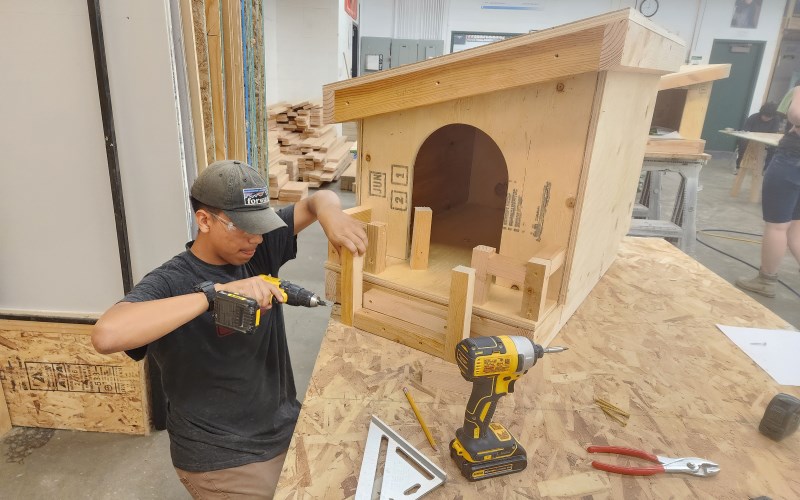
The film “Multiple Choice” touted carpentry as one skill students can pursue that is not in danger of going away for now.
|
|
|
"We continue to educate kids to this day with a model that dates back to 1893," Dintersmith told an audience at The Argyros. “It was expressly designed for the industrial era—we needed rote skills, so we promoted rote learning in our schools. What's antithetical to a functioning assembly line? Creativity, curiosity, audacity, agency. So, by design, we crushed those traits out of kids."
That system worked from 1893 until about 1970, he said. Today, it's not just obsolete—it's doing "violent disservice" to children.
“We need to prepare students for 2050, not 1950,” said Dintersmith, a former venture capitalist who visited more than 200 schools in all 50 states to study approaches that prepare young people for real life. “They need to have multiple choices, not just on tests but for life.”
The numbers are sobering. In 1970, 99 percent of jobs were rote work—one person would innovate and hire others to follow instructions. Today, maybe 10 percent of jobs are rote. Meanwhile, artificial intelligence is advancing so rapidly that what seems impressive today pales compared to what developers already have in their labs.
|
|
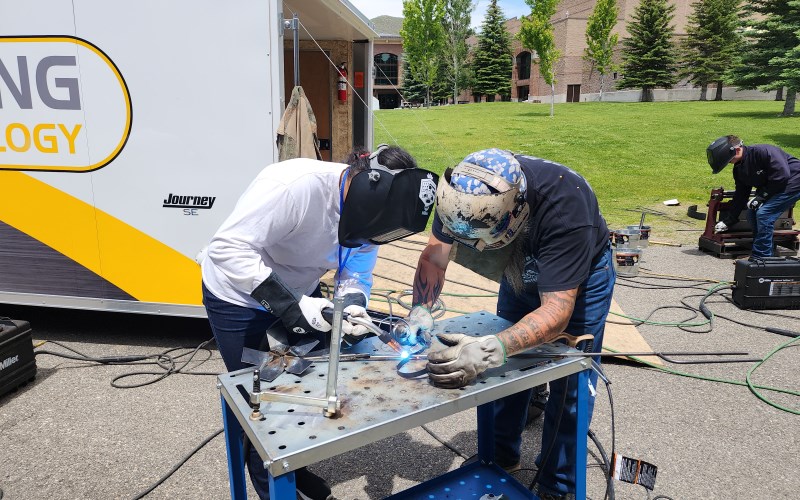
Far + Wise offered a welding camp two summers ago to give students a chance to try it out.
|
|
|
"Take it unbelievably seriously," Dintersmith warned. He cited Anthropic's Claude Cowork, which handles repetitive tasks like files and applications autonomously. A project that would have taken Microsoft five years and 300 people was developed by four skilled humans using AI in just ten days.
"As good as you think AI is today, what they already have in the lab that they haven't released is way better," he said.
The value proposition they offer employers is that you can get twice the work done using half the headcount, he said.
This creates a crisis for students who spend 16 years jumping through academic hoops, only to find themselves competing with AI for jobs. College graduates already report difficulty finding employment—and it's only going to get worse.
|
|
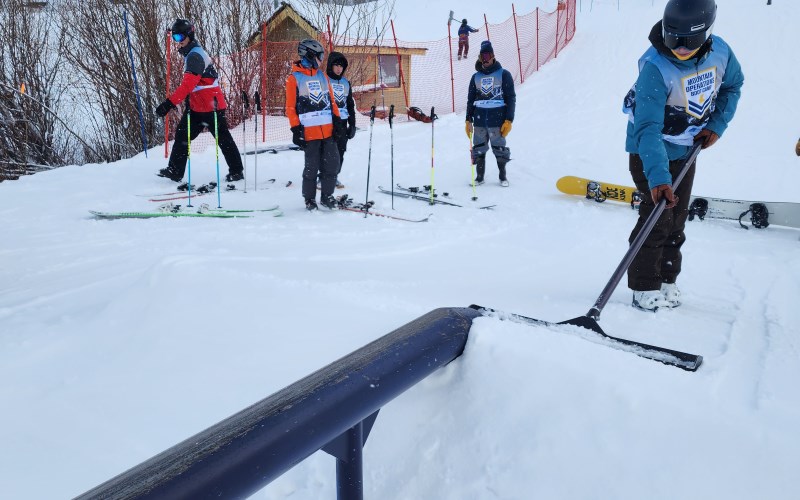
Sun Valley Resort has teamed up with Far + Wise to offer students the chance to explore what careers in hospitality or, in this case, building terrain parks on Bald and Dollar mountains look like.
|
|
|
"What played out over three to four decades as robotics and outsourcing marginalized millions of jobs will play out over three to five years with AI,” Dintersmith said.
Dintersmith’s solution isn't to abandon education but to revolutionize it. His film showcases the Emil Grace Shihadeh Innovation Center in Winchester, Va., where students explore careers through hands-on training in such subjects as AI, cybersecurity, and carpentry alongside traditional academics.
Dintersmith praised Wood River Valley schools for doing great things but noted they're outliers. Idaho ranks as a bottom dweller in education funding although, he said, teachers remain "unbelievably dedicated heroes."
His message for parents: Help kids get really good at using AI and/or encourage them to pursue hands-on skills that will be safe from automation or encourage them to pursue creative career paths.
|
|
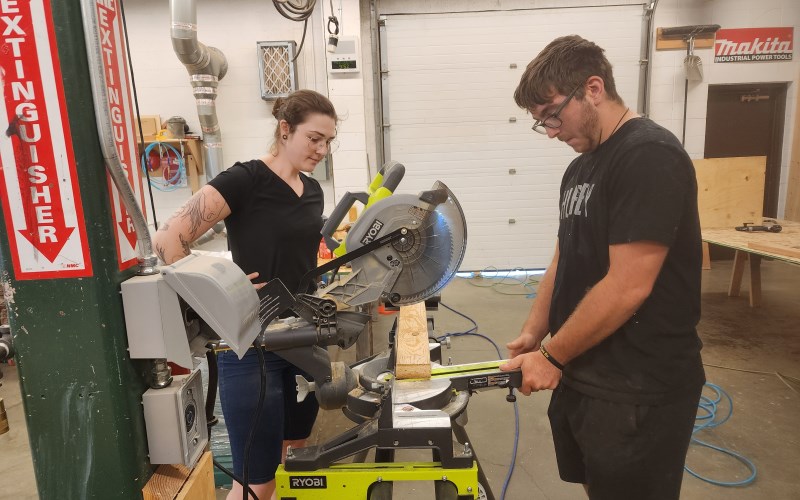
Students who learn skills in carpentry and other trades can fill workforce needs in their community—the film said 80 percent of high school graduates will live and work within 100 miles of where they went to high school.
|
|
|
"You show me an 18-year-old who can develop AI bots. It doesn't matter whether they have a credential--they're in great shape," he said, noting that fourth-graders have AI to create and publish children's books on Amazon within 72 hours.
The filmmaker refuses to sell his documentaries to streaming platforms, instead organizing community screenings to spark local discussions. His first film, “Most Likely to Succeed,” generated over 10,000 such events.
"Small stories can tell great big stories," Dintersmith said. "This is really a film about a community, about all kids being supported to find their lanes.”
|