|
STORY BY KAREN BOSSICK
PHOTOS BY GINA POOLE and DAVID GEFFIN
Esau is 35 years old and a risk taker who is in the habit of raiding plantations near Mount Kilimanjaro for tomatoes, cabbage and watermelon.
Craig was big on tolerating humans, a trait that kept him safe since he was always in the presence of people who kept him safe from poachers.
|
|
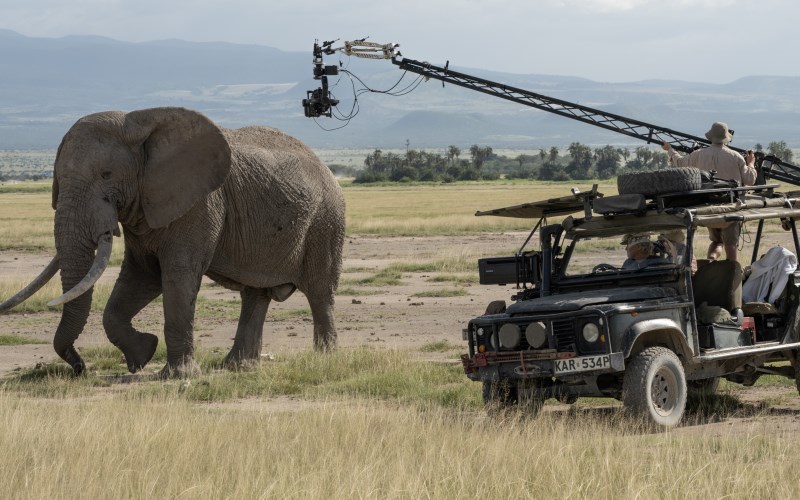
It’s believed there are fewer than 30 Super Tuskers left in all of Africa. PHOTO: David Geffin
|
|
|
And Pascal, 45, is so formidable that nobody will challenge him to a fight. But his massive size and his ivory tusks, each of which weigh more than a hundred pounds, make him a target for poachers.
These three African bull elephants are super tuskers, the largest mammals on the planet, averaging 11 feet tall at the shoulder and weighing between five and seven tons.
Ketchum cinematographer Bob Poole and his wife Gina had the opportunity to film Kenya’s legendary bull elephants in the wilds of Amboseli National Park. Their film, “Tusker: The Brotherhood of Elephants,” screened to a turn-away crowd at The Argyros during the Sun Valley Film Festival in early December. And on Wednesday it will air on PBS Nature.
The documentary, which shows the resilience, wisdom and social bonds of these animals, airs at 7 p.m. Wednesday, Jan. 14, for those who have Cox Cable. After it hits PBS Nature, it will stream on YouTube and PBS Passport. The film will air internationally through Blue Ant Media.
|
|
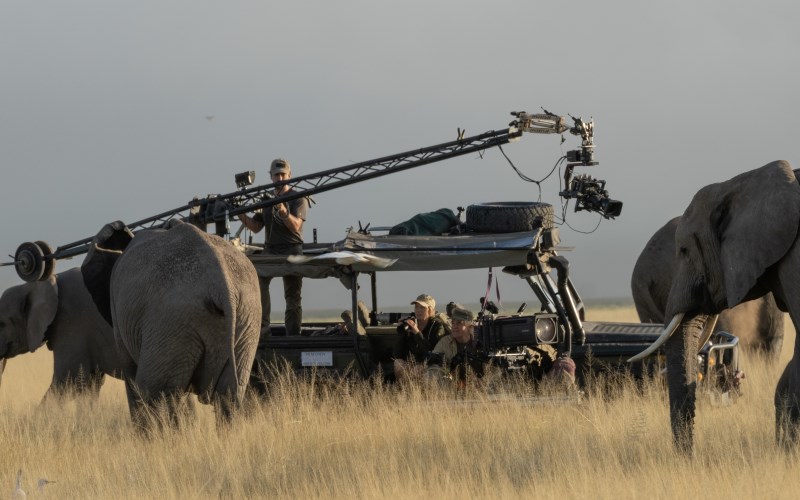
African elephants, who can live into their mid-60s, are the largest mammals on the planet, averaging 11 feet tall at the shoulder and weighing between five and seven tons. PHOTO: David Geffin
|
|
|
“Bull elephants are rare, and big bull elephants—super tuskers—are very rare—there are fewer than 20 in Kenya,” said Bob Poole, who co-produced the film. “They’re so incredibly powerful they can knock down trees. And there’s very few places other than Amboseli National Park where you can see them.”
Bob, who has shot footage of elephants and other African wildlife for National Geographic, has wanted to do a film focusing on tusker elephants for years.
His sister Joyce Poole is an elephant researcher who has been focusing on males most of her career. In 1976 she went to Amboseli where she discovered that that African elephants use very low frequence calls to communicate with one another over long distances. She also discovered that they dribble a pungent smelling musth to advertise their testosterone to females during their sexual cycle.
“They spend three quarters of the year bulking up, but then there’s three months where they become highly aggressive during their sexual cycle,” said Gina Poole. “Their personality takes a twist, kind of like Dr. Jekyll and Mr. Hyde.”
|
|
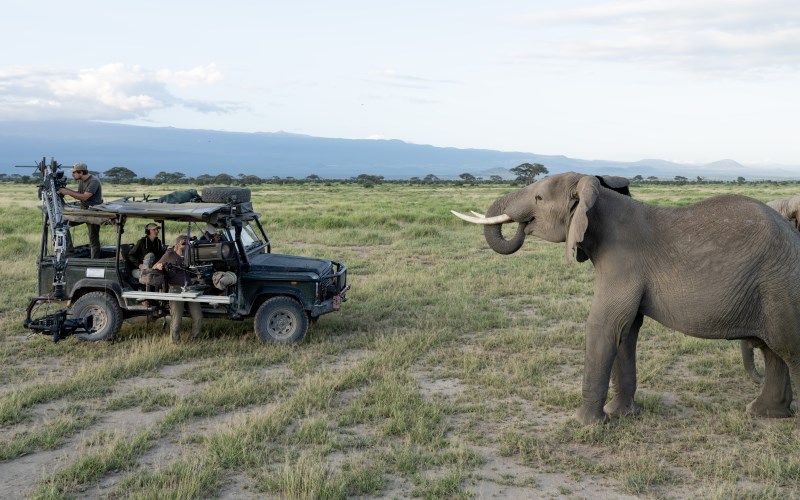
Elephant trunks have 150,000 muscles, which they use for breathing, smelling, drinking, grasping and communication. PHOTO: David Geffin
|
|
|
“While they can be incredibly gentle three quarters of the year they can be absolutely terrifying when in musth,” added Bob Poole. “And nothing is more powerful on earth than a bull elephant.”
Bob pitched the idea for the film without success to National Geographic. So, he teamed up with others to get it financed. Among the sponsors was Arri whom, Bob says, makes the best film cameras in the world.
They loaned him their new large format Alexa 35 camera system. And Fujinon, whom Bob says makes the “absolute best lenses,” loaned him a $1/4 million lens that is designed for sports arenas.
The lens and camera offered him a higher production quality than he’d ever worked with. But, together, they weighed a hundred pounds.
|
|
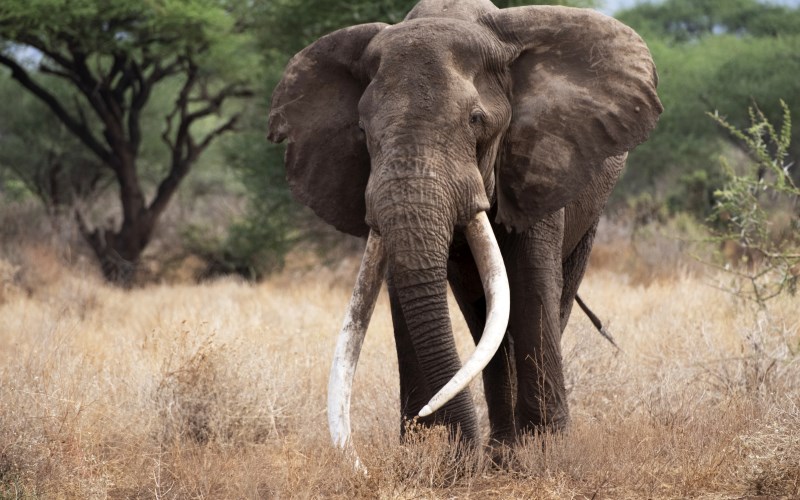
The tusks are so long and heavy they often sweep the ground. PHOTO: Gina Poole
|
|
|
“We couldn’t ship it because it was too heavy to go as excess baggage in air cargo. So, Gina organized it so that we bought it an airplane seat like musicians do with cellos,” Bob said.
Bob retrofitted his Land Rover with a 16-foot-long jib strong enough to hold the camera as they bounced through brush and off-road terrain full of warthog and hyena holes.
The camera had a low aperture, which enabled hm to film in twilight and during crop raids at night.
“Typically, people shoot wildlife with lenses ranging from 50 mm to 1,000. This ranged from 25 mm, which is a very wide angle, to 1,500 mm. That enabled me to have an elephant come right next to the car and still be able to film it. Yet, if anything happened far away, I could still get the details of the action,” he said.
Eventually, the Land Rover’s suspension gave out under the weight of the jib and camera.
“We got a lot of stares. But we tried to shoot everything with two cameras, and Gina operated a Gimbal and it all looks fabulous,” Bob said.
The project was a family affair Bob’s sister Joyce Poole served as scientific advisor. Her daughter Selengei, who excels at spotting and identifying individual elephants, served as associate producer. Bob’s nephew-in-law Tom Stafford operated one of the cameras.
“He had studied film and had been to Africa where he spent time with elephants, and we wanted to get him on the shoot because he’s strong and talented,” said Gina. “We needed somebody who could wheel that big jib and was comfortable around elephants.”
Alison Argo was the writer and producer.
The crew filmed three different shoots in 2024 and 2025, leaving their lodge in Amboseli National Park before sunrise and returning after dark. The second shoot they did in the Kimana Sanctuary where the elephants were in their bull areas, not in musth
They were able too tell the story of the three different bull elephants in different stages of life with different personalities and life strategies.
Craig died of natural causes last week at age 54. Amiable enough to have his picture taken with tourists, he served as the ambassador for the East African Brewery’s lager Tusker.
“Everybody loved Craig—he was a giant with massive tusks, and he was peaceful and tolerant,” said Bob. “His strategy was so different from the others. He survived, even with his massive tusks, through many waves of poaching because he learned to stay close to humans he trusted. The Maasai revere elephants in their culture, and poachers can’t get near because people are always watching him.”
Esau, a 35-year-old elephant had just reached sexual maturity which, for bull elephants comes in their mid-30s. But he takes a lot of chances, raiding crops.
“This young guy is an incredible elephant. He got to know us and we got to know him very, very well. He didn’t care about us at all. He allowed us to get so close to him. We’d put the big camera right on the ground with a wide-angle lens and he got very comfortable with it, allowing us to get some amazing shots,” said Bob.
“Over time he started coming right up to the cameras. We’d be like, ‘Don’t touch that!’ ” recounted Gina.
The third elephant, was the 45-year-old named Pascal, who carries more than a hundred pounds of ivory per tusk.
“Nobody would challenge him to fight because he’s so formidable. Once he’s off cycle when he’s putting on weight he goes to Tanzania to a place that recently became very dangerous because they started to allow trophy hunting and he’s a massive target,” said Bob.
“All these elephants are trying to navigate this quickly changing world in which new farms, fences and tourism are popping up in what was excellent elephant habitat,” said Bob.
Bob and Gina hope that their film will inspire more people to want to protect the elephants. Currently most super tuskers get killed in their 20s, targeted by trophy hunters and poachers.
“The Masai revere elphants in their culture, and poachers can’t get near because people are always watching him.
|