|
STORY AND PHOTOS BY KAREN BOSSICK
The City of Ketchum is closing in on a new police chief. And it’s finetuning a water restriction ordinance it hopes it never has to use.
Those taking part in the monthly Coffee Talk held by the city in partnership with the Chamber learned all this and more over chocolate croissants and sticky buns served up at the new Capstone Accounting and Tax office at 100 S. Leadville Tuesday morning.
Mayor Pete Prekeges opened the morning by noting he’d just marked a busy first six months in office, achieving progress on crosswalks and highway safety with the Idaho Transportation Department even as the Highway 75 construction project continues to test commuters' patience.
|
|

The City of Ketchum sponsored a float in Hailey’s fourth of July parade that included a skier and Dark Sky telescope on one side of Bald Mountain and a cellist and picnickers at the Sun Valley Music Festival on the other.
|
|
|
"We haven't solved any traffic problems, but we're trying," Prekeges said. "Nobody wants it to go longer than it has to."
Prekeges said the city got 29 applicants for police chief. And five finalists will be interviewed today by a citizen panel, a police department panel and a city panel.
An HR firm from Boise with a consultant who has 32 years of police experience has been assisting with the search, Prekeges said. The transition is set for Aug. 3.
On the legal front, the city plans to hire Josh Stanek, a locally born and raised attorney who lives two blocks from City Hall, as its new city attorney. His hiring will be reviewed at Thursday’s council meeting, which begins at 3 p.m. with previously published public hearing items adhering to the original 5:30 p.m. agenda.
|
|

Grace Jensen and Tyler Sanders hosted the monthly Coffee Talk as Heidi Shelton, a financial advisor who grew up in Ketchum and once worked as a rocket scientist in Los Angeles, was off mountain biking in Park City.
|
|
|
"What he brings to the table is that true local knowledge," Prekeges said. "And local, remember, is a state of mind, not a length of time."
Daniel Hansen, the city's director of community engagement, told of a three-stage water restriction ordinance coming before the council on Thursday, July 9. Current restrictions are less stringent than Hailey's or Sun Valley's, he noted.
Stage 1 would prohibit watering between 10 a.m. and 5 p.m. and limit irrigation to three days per week, with odd-numbered addresses watering Monday, Thursday and Saturday and even-numbered addresses watering Tuesday, Friday and Sunday. The city would encourage limiting each zone to 30 minutes and reducing consumption by 10 percent.
If the Northwood well, which serves most of downtown and the majority of residential users, drops 25 percent over seven days, Stage 2 would kick in, limiting watering to 15 minutes per station, banning new sod and landscaping installation and shutting down fountains, ponds and personal car washes (commercial car washing would be permitted).
|
|
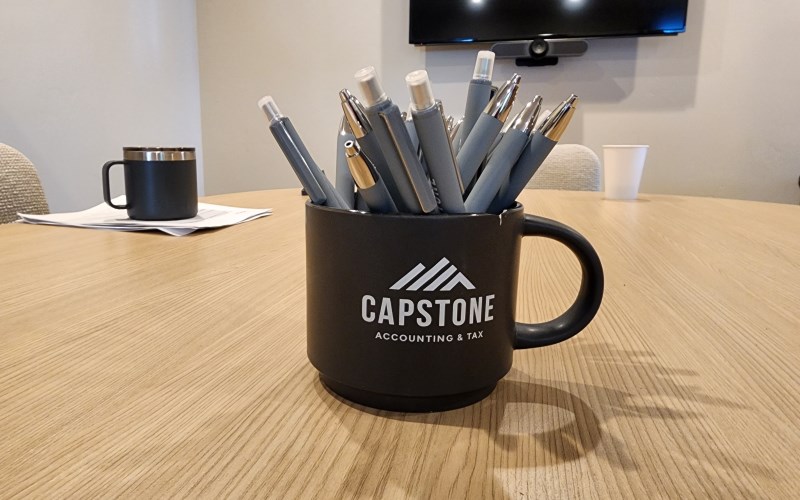
Capstone has 17 offices across the Pacific Northwest, including three in Idaho.
|
|
|
Stage 3, triggered by an extreme drought or state declaration, would restrict drip irrigation, filling pools and hot tubs and certain construction uses.
Ben Whipple, the city's senior project manager, said the restrictions follow practices most landscapers already adhere to in Hailey and Sun Valley.
Whipple said that 70 percent of Ketchum's water consumption occurs during irrigation months. A forthcoming study by the Wood River Land Trust will show that all the cities in the valley combined represent a small slice of overall county water usage compared to unincorporated Blaine County, he added.
The bulk of the discussion centered on a local option tax proposal for the November ballot.
|
|

Jensen Stern Jewelers on Leadville Street in Ketchum has cleverly called attention to its window displays with road construction exhibits, in keeping with the current scene coming into Ketchum, calling on passersby to STOP!
|
|
|
Brent Davis, the city's director of finance, said that a Zartico study commissioned by the city confirmed what officials had long estimated: About 82 percent of LOT revenue is paid by tourists, with only 17 percent or 18 percent coming from credit cards with local zip codes.
Groceries, liquor store purchases, car purchases and gas are exempt from the tax.
Under the proposal, the total retail tax rate would rise from 8 percent to 8.5 percent — still below Sun Valley's 9 percent. Lodging would go from 11 percent to 13 percent, matching Hailey and sitting 1 percent above Sun Valley's 12 percent. Building materials would also see a half-percent increase to maintain parity with retail. Liquor by the drink is not proposed for an increase.
The total new revenue: $2.194 million annually, with $1.12 million from the retail increase, $820,000 from lodging and $254,000 from building materials.
A resident spending $2,000 a month in Ketchum outside of grocery stores and liquor stores would pay an additional $10 a month, or $120 a year, Davis said. The ballot measure is not connected to the separate additional LOT that funds housing and air service.
This money is earmarked for streets, sidewalks, and related infrastructure. Prekeges hopes to build a Second Avenue multi-use path up Fourth Avenue connecting at Spruce to create a continuous bike path from Bellevue to Sun Valley.
Most of Ketchum's streets were built 50 years ago and have been maintained with chip seal at a cost of $125,000 to $150,000 a year — a figure that hasn't come close to address the infrastructure's aging.
"I want you to just momentarily visualize the city of Ketchum and visualize all the streets and say, how far do you think $150,000 goes?" Davis said.
A citywide road assessment rated Ketchum's streets at a mid-70s grade on average — decent, but expensive to maintain. The assessment recommended $5 million a year in perpetuity. The LOT increase would generate $2 million--enough to keep the city on a good trajectory though average road conditions would still degrade slightly over time.
The cost difference between chip seal and full reconstruction runs between seven- and 15-fold, depending on how deep crews have to dig, Davis added.
Davis explained why the city chose the LOT route over alternatives. A general obligation bond would put 100 percent of the burden on property taxpayers. A property tax increase would require a two-thirds supermajority vote — extremely difficult to achieve — and would also fall entirely on locals. The LOT spreads the cost predominantly to tourists.
The approach has kept Ketchum's property tax reliance remarkably low. The city's general fund relies on property taxes for just 39 percent of its revenue, compared to about 70 percent in Twin Falls and the high 60s in Boise.
Owners of a million-dollar home in Ketchum pay about $3,400 a year in total property taxes, whereas million-dollar home owners in McCall pay more than $4,400 and Twin Falls, more than $10,000.
That low rate is supported by a taxable property value of about $7 billion — three times Hailey's $2.2 billion, despite Hailey having nearly three times the population. Some 66 percent of Ketchum homes lack a homeowner's exemption, meaning they are second, third or even tenth homes.
Davis also addressed the looming sunset of the Ketchum Urban Renewal Agency in 2030. KURA has been funding about $2 million a year in capital improvements, with $5.7 million budgeted for 2027. When it sunsets, the city will recover roughly $570,000 annually through the growth formula — a fraction of what KURA has been providing.
"I'm going to let that sink in just a little bit," Davis said.
Questions? Call Brent at 208-726-3841 or 208-806-7065. Or, email him at bdavis@ketchumidaho.org. Or, learn more at a Community Conversation at 5:30 p.m. Monday, July 13, at City Hall.
|