|
STORY AND PHOTOS BY GUSTAVO PEREZ Over the years, El Salvador has transformed from a place of fear to one of unexpected beauty. When my family first suggested a trip to my family’s ancestral homeland, I hesitated—my last visit in 2021 was marked by warnings of gangs, corrupt police and a nation struggling to survive. But this time, something felt different. I wasn’t just going to see a country; I was going to see how far it had come—and how much still remained.
|
|
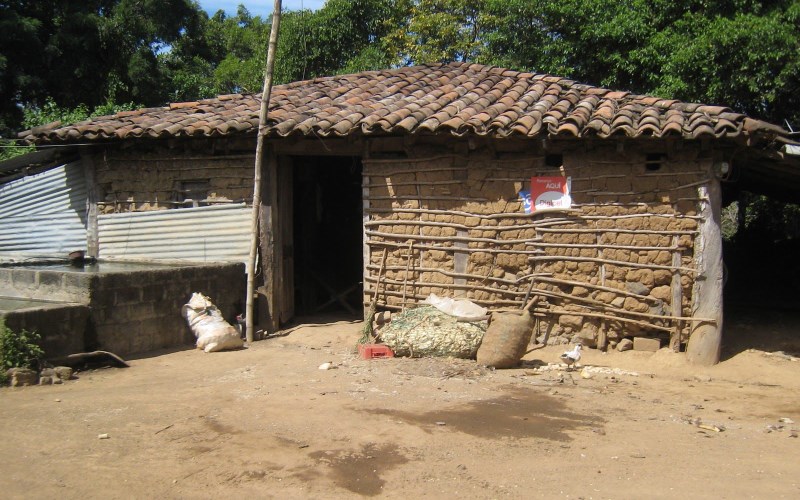
A weathered, small home shows signs of disrepair and neglect that is seen in many rural areas.
|
|
|
Upon arriving in El Salvador, the mental toll of three layovers—one lasting 14 hours—melted away. Stepping out of the airport, the first thing we encountered was the heat. The first wave of warm air that brushes past your face carries a sense of welcoming, a feeling mirrored in the many emotions of the dozens of reunions we would soon experience. The drive from the airport shows you a glimpse of this foreign world. Canopies of trees form a tunnel, as if Mother Nature herself was reaching out to protect us from the glaring sun. Past that you are greeted with open scenery showing a distinct harmony between the flora, fauna and the people who reside in the area. Alongside the vast forest are local vendors who are selling their fresh produce at the break of dawn. Some exotic fruits stood out: zapotes and anonas, with their sweet, custard-like flesh and complex flavors, and platano peludo, a hairy banana known for its bright pink hue and tough texture—more ornamental than edible.
|
|
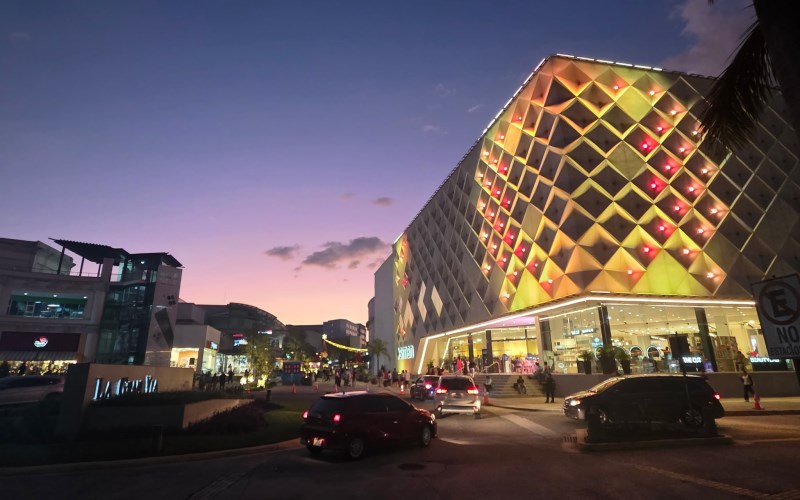
The Gran Via Mall, recently remodeled in 2023, features a modern architectural style.
|
|
|
A few miles further, we arrived at our most anticipated, food-related stop of the trip—the local pupusa markets. Streets lined up with open restaurants selling the staple food of the nation. In its simplest form, the pupusa is a thick tortilla filled with your choice of stuffing. The most common of all is the pupusa rellena, filled with beans, cheese and chicharron. While you can find them in a few Salvadoran restaurants in Idaho, nothing compares to the authentic version from El Salvador, the dish’s country of origin. I never imagined that a simple dish could have such a vast difference in taste and quality. As someone who has a lactose intolerance, I’ve come to realize that sometimes sacrifices are necessary to truly appreciate the art of the pupusa. For any lactose intolerant readers out there—many variations of the pupusa exist that don’t contain cheese, our greatest enemy—so please do not be discouraged. There are plenty of options that cater to your dietary needs. Around two hours later, we arrived at our home near Izalco. While El Salvador as a whole has undergone rapid development, many colonias still show a glimpse of what the nation used to be.
|
|
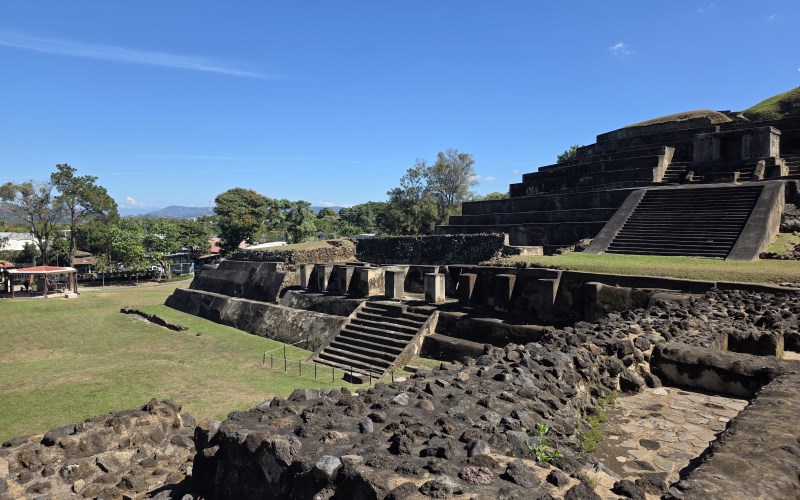
The Tazumal ruins show just a glimpse of the past, as many temples lie underground, inaccessible to the public.
|
|
|
A colonia is a small settlement of people that live on the outskirts of bigger towns or in the vast forest--remote areas untouched by modernization. In-home stores, tienditas, are common in the area to meet the needs of locals. Families specialize in different products. Some sell beans, rice and fruit while others distribute poultry and dairy. Although there is a harmony seen existing here, poverty is still prevalent as many families cannot afford many of the commodities now available. Litter is also still a prevalent issue in many areas, as well, as are dilapidated homes and many beggars frequenting areas without police presence. Areas where tourist presence is high show a stark contrast to the reality that many Salvadorans live in. Huge plazas and shopping malls are now present in almost every city and town in El Salvador, even those that have populations much smaller than Twin Falls.
|
|
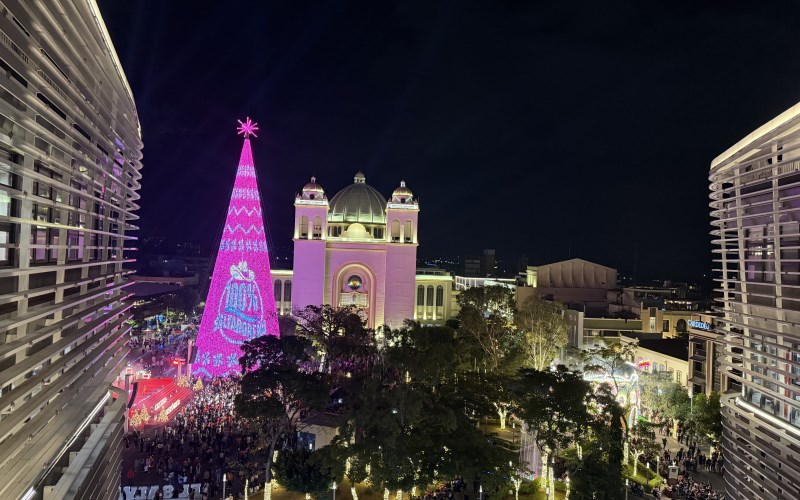
The Historic Center pictured from the balcony of the National Library.
|
|
|
Other areas with high tourist presence are those of cultural and historical significance such as the Tazumal Ruins in Chalchuapa. The region of Chalchuapa is home to a large variety of archeological sites such as Casa Blanca, El Trapiche and Las Victorias. The Tazumal ruins show some of the best insight towards Mayan and other Mesoamerican cultures. The first sight you see when entering the park is the large pyramid structure at the center with an altar placed near the top. It's a breathtaking view of what once was. You may be inclined to hire a tour guide, but it’s one of those experiences that is best when you walk around the area adrift from any noise or distraction. The ruins give you a sense of stepping into the past. But, in reality, you are standing above the ruins. In this site, there are a total of eleven underground Mayan temples, much of which is unable to be accessed as the entire town of Chalchuapa has been built above them. Due to a lack of funding, excavating these ruins has been deemed both unrealistic and potentially dangerous with the full extent of the underground structure still remaining unknown today.
Residents of Chalchuapa regularly find artifacts if they dig in their gardens and, as historically important as it may be, displacing thousands of locals would be too great a burden. Another historic area to visit is the Centro Historico in San Salvador. Located in the heart of the capital, this lively plaza is home to several significant landmarks, including the country’s main Catholic cathedral—the Catedral Metropolitana--the National Palace with its classical architecture blending Mesoamerican and European influence, and the Teatro Nacional. Also situated here is the BINAES (The National Library of El Salvador), a state-of-the-art cultural and educational center that was completed in 2023 and is the first national library to offer 24/7 public access. When we arrived, the plaza was host to many professional dance ensembles as well as singers performing well-known western songs for Christmas. Public theater performances were held, such as a troupe’s rendition of the Grinch on the opposite side of the plaza.
No matter where you go, you are surrounded by a dazzling display of the nation’s culture, history and aspirations for the future. Another highlight of the trip was our New Year’s experience at the surf town of El Tunco, a town filled with surf enthusiasts from around the globe. Here you see a blend between tourist and local life. We went to a restaurant called Papaya that had a vast balcony that offered a beautiful scenic view of the ocean and constant waves of the refreshing cool wind. In the distance you then see why this area is called El Tunco. Tunco is another word for “pig” in El Salvador and just a few meters from the beach, a giant partially submerged rock formation that resembles an upside-down pig can be seen.
The town carries an unique beauty to it. It’s -a refuge for surf lovers and beachgoers, yet a divide between the fortunate and unfortunate can be seen. A manmade river that almost reaches the ocean separates the tourist town from locals who have lived there for generations. The same broken homes that can be seen in colonias are seen there: homes with missing doors, poorly made roofs and trash build-up mar the beautiful landscape. Once nighttime comes, all that remains is the bright life of a tourist haven, obscuring the struggles of those within arm’s reach. Fireworks bring to life the night sky, while party lights reflect off the ocean’s surface to create an atmosphere like no other. The music swallows you whole as your heartbeat begins to match the rhythm of the booming bass. Food and drinks are plentiful as you slowly forget the landscape you saw, and all that's left is to enjoy that one single moment when the clock strikes midnight.
Following the New Year’s festivities, our trip was mellow for the remaining five days, mostly revolving around spending time with family. We traveled to the nearby town of Sonsonate to go to an uncle’s wedding, and we went to the town of San Ignacio—situated at the base of the nation’s highest peak, El Pital. During this time I gained an obsession for a food known as casamiento, which is just rice and beans when cooked together. Two ingredients when combined made me remember many of the dishes I had grown up on where rice and beans were key components. Memories of when my grandmother made pupusas out of it sprung to mind and, in a sense, the Salvadoran part of myself woke from its dormancy. As the trip came to a close, I began to feel conflicting emotions. I missed Idaho, the place where I had grown up, and I felt excitement over what awaited me back home and how my experiences had changed me as a person. At the same time, the realization that I would not be able to visit El Salvador in the near future left me with a deeper appreciation of the experiences I had and the family I got to reconnect with.
As I stepped onto the plane back to Idaho, the weight of El Salvador felt different. The fear I carried on my first flight had been replaced by a newfound understanding of a country that is both breathtakingly beautiful and deeply scarred. I had seen the gleaming plazas and the vibrant cultural life, but I had also witnessed the poverty in the colonias and the stark divide in El Tunco. This duality—of progress and struggle, of beauty and hardship—became the true essence of El Salvador. And in that complexity, I found something unexpected: a reawakening of my own Salvadoran identity. It reminded me that my identity isn’t solely American or whatever others may see on the surface. I may return to Idaho, but a piece of me, and a deeper understanding of my heritage, will remain in El Salvador, forever changed by the journey. EDITOR’S NOTE: Gustavo Perez, who grew up in the Wood River Valley, is now a student at a college in the Treasure Valley.
#2# A weathered, small home shows signs of disrepair and neglect that is seen in many rural areas.
|