|
|
|
Butch Cassidy and the Sundance Kid Bedeviled Union Pacific’s Harriman
|
|
|
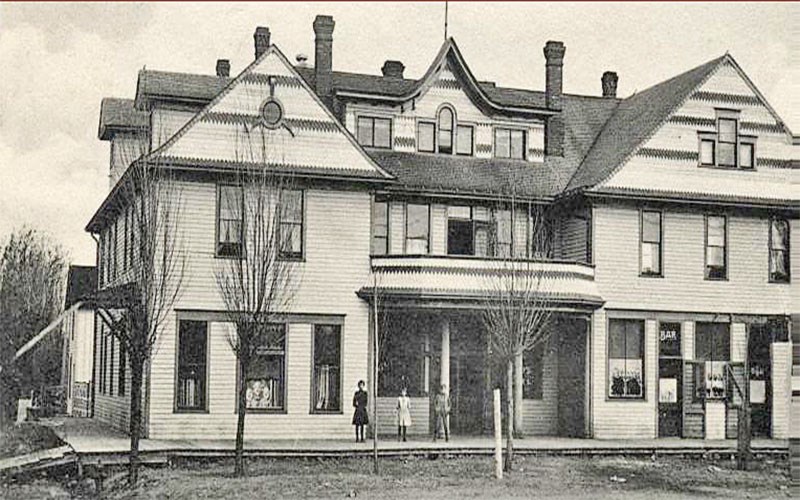
Butch Cassidy, the Sundance Kid and the Hole in the Wall Gang stayed at the McFall Hotel in Shoshone in between their last robberies on American soil. COURTESY: John W. Lundin
|
|
|
|
|
|
|
|
|
|
Saturday, May 30, 2026
|
|
|
|
BY JOHN W. LUNDIN Butch Cassidy, aka Robert Leroy Parker, his side kick the Sundance Kid, whose given name was Henry Longabaugh, and the Hole in the Wall gang were the most prolific, successful and best-known bank and train robbers in the history of the American West. Butch was a master planner and escape artist who organized a string of holdups in various western states in the 1890s, including Idaho, and was sometimes known as the “American Robin Hood.” The outlaws were memorialized by the 1969 movie, Butch Cassidy and the Sundance Kid, a classic “buddy movie” starring Paul Newman as Butch and Robert Redford as Sundance. Katharine Ross played Etta Place, Sundance’s girlfriend, with Burt Bert Backarach’s “Raindrops Keep Fallin' on My Head" written for the movie. The movie was filmed in Utah, and showed classic Western scenery in the ghost town of Grafton, Zion National Park, Snow Canyon State Park, and the city of St. George.
|
|
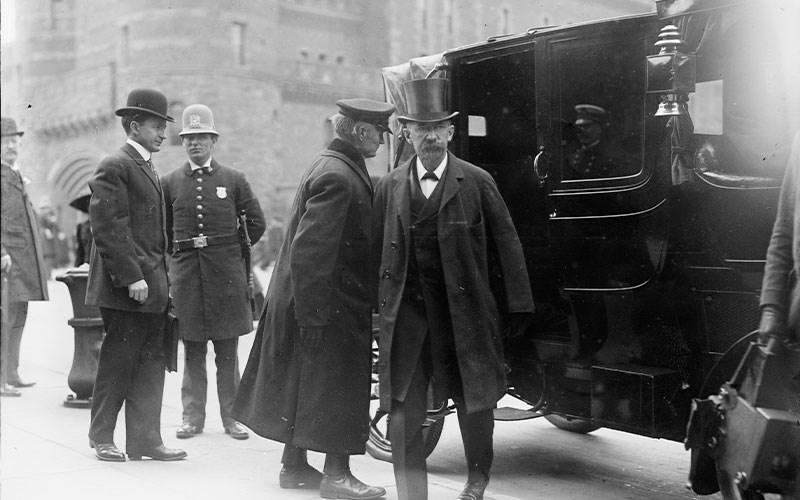
E.H. Harriman hired the Pinkerton Detective Agency to thwart Butch Cassidy and the Sundance Kid. COURTESY: Idaho Department of Parks and Recreation
|
|
|
Based loosely on fact, the film tells the story of Butch Cassidy and the Sundance Kid as they run from a posse led by a Pinkerton detective after a string of train robberies. The pair and Sundance's lover flee to Bolivia to escape, where the two are killed by the army. Although initially panned by reviewers, the movie grossed over $100 million and was later recognized as one of the most influential movies of the era. It won Oscars in four of the seven categories in which it was nominated, and has been recognized on a half dozen of the American Film Institute’s AFI 100 Years awards. "With its iconic pairing of Paul Newman and Robert Redford, jaunty screenplay and Burt Bacharach score, “Butch Cassidy and the Sundance Kid” has gone down as among the defining moments in late-'60s American cinema," wrote Rotten Tomatoes in 2020. The New York Times named the movie one of The 1000 Best Movies Ever Made. Butch, Sundance and their gang had interesting connections to Idaho, Shoshone, including my own family, that are not well known. Their story provides insight into how the West changed in the late1800s.
|
|
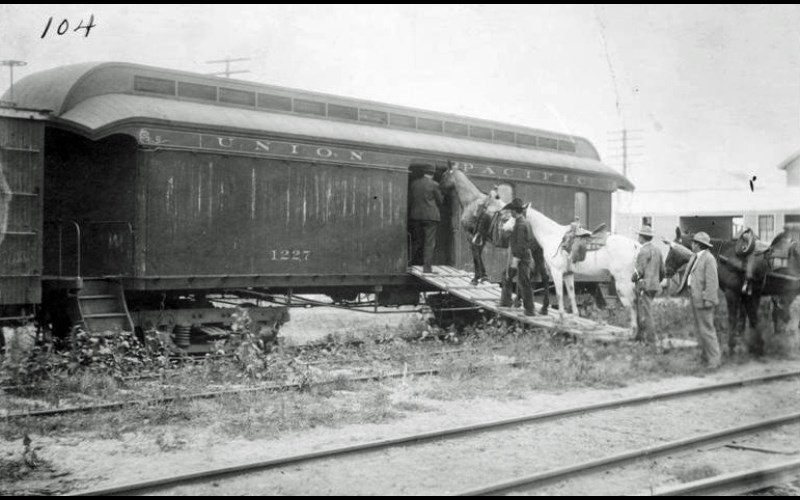
A posse hired to go after the Hole in the Wall Gang loads horses into a Union Pacific car on the Oregon Short Line. COURTESY: John W. Lundin
|
|
|
In 1881, my great-grandparents, Matt and Isabelle Campbell McFall, and Isabelle’s Campbell family, moved from the silver fields of Eureka, Nev., to the new boom town of Bellevue, Id., attracted by the silver strike in the Wood River Valley that brought thousands of prospectors and settlers into the area. McFall built the International Hotel on Bellevue’s Main Street in 1882, and it became the premier hotel in the Wood River Valley, according to History of Idaho Territory, published in 1884: “The International Hotel is the chief hotel of Bellevue situated on the corner of Main and Oak Streets. It has accommodations for 75 guests. The rooms are all well-furnished and kept in first-class order. Matt McFall is the proprietor.” According to Clark Spence, in his book For Wood River or Bust: Idaho’s Silver Boom of the 1890s, “Matthew McFall's International Hotel in Bellevue was considered one of the best in the territory, and McFall also maintained an extensive boardinghouse and hotel at Broadford.” In 1893, in the middle of the International Silver Depression (1888-1898) that devastated Idaho’s silver-based economy, the McFalls moved from Bellevue to Shoshone, a thriving railroad town on the Union Pacific Railroad’s cross-country line operated by the Oregon Short Line. Shoshone, as the junction between the Wood River Branch of the Oregon Short Line, and its main rail line running from Granger, Wyo., to Portland, was at the center of Central Idaho’s growth over the next few decades.
|
|
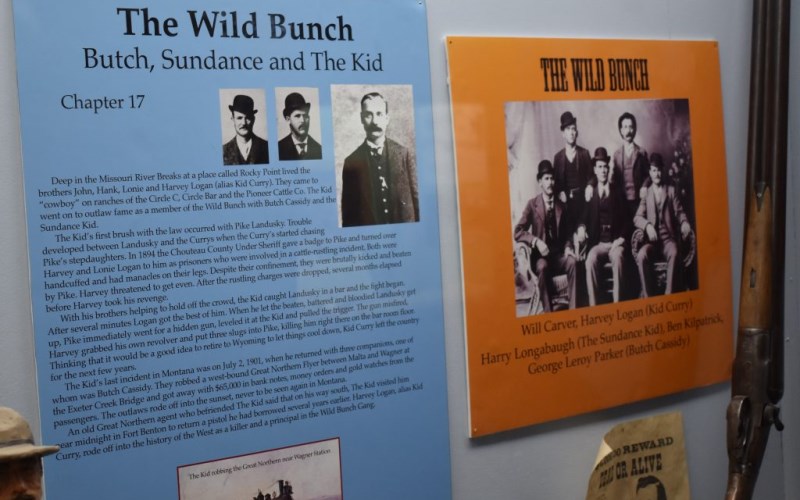
A museum exhibit at Fort Benton shows a well-known picture of the Hole in the Wall gang. PHOTO: John W. Lundin
|
|
|
The McFall Hotel, also known as the McFall House, was built by the author’s great-grandparents in 1900 in Shoshone. The hotel quickly became the growing town’s “place to stay,” and its commercial and political center that attracted a variety of guests, some more famous than others. Two U.S. presidents stayed at the hotel, and Ernest Hemingway stopped to drink at the McFall Hotel bar on his road trips in Idaho. Philip A. Homan, a Professor at Idaho State University, determined that Butch Cassidy, Will Carver and likely other members of the Wild Bunch gang, also known as the Hole in the Wall Gang, stayed at the McFall House in September 1900. This was a stop for the gang between robbing a Union Pacific train in Wyoming before they robbed a bank in Winnemucca, Nev. Later that fall, Will Carver and Harvey Logan returned to the McFall House to recover loot from the train robbery they had hidden nearby. Homan reviewed the Pinkerton’s National Detective Agency records at the Library of Congress in Washington, DC, as he researched the events leading up to and following the gang’s “last hurrah”--the Winnemucca bank robbery that financed Butch Cassidy and the Sundance Kid’s flight to South America. The story of the gang staying at the McFall House has been reported in other sources, including Tiger of the Wild Bunch: the Life and Death of Harvey “Kid Curry” Logan, by Gary A. Wilson, and Desperate Men: the James Gang and the Wild Bunch, by James David Horen. The story of Butch Cassidy and the Sundance Kid seems like ancient history of the Old West. However, when the gang stayed at the McFall Hotel in 1900, the author’s grandmother was 10 years old and living in the hotel with her family. She may have seen the men in the hotel lobby or even talked to them.
Life was hard in the Rocky Mountain West in the 1890s. The effects of the International Silver Depression were made worse by a series of major droughts, which killed thousands of head of stock and caused ranches and farms to close. According to Marc Reisner in his book, Cadillac Desert: The American West and Its Disappearing Water, the “great white winter of 1886" came first and devastated western ranches. At least 35 percent of all cattle herds in the West were lost, but the loss ran as high as 75 percent in some regions, leading to the financial ruin of much of the cattle industry on the Great Plains. Major droughts followed, and the decade after the great white winter was a decade when the western half of the continent decided to dry up. Another major drought hit the Great Plains in 1890, “a calamity so deep and widespread that it staggered even the optimism of the West.” These droughts led to a depopulation of parts of the West. Kansas and Nebraska lost between one quarter and one half of their population, and only 400,000 homesteading families remained out of more than one million who had moved west. Thousands of ranchers and ranch hands lost their jobs because of the droughts, including Robert Leroy Parker, who organized some of his out-of-work compatriots into a gang known as the Wild Bunch, and took the name Butch Cassidy. Butch’s gang changed membership over the years, but its most famous members were Henry Longabaugh (the Sundance Kid), William (News) Carver, Ben Kilpatrick (the Tall Texan), and Harvey Logan (Kid Curry).
Longabaugh reputedly called himself the Sundance Kid because he had spent 18 months in the Crook County jail for horse stealing. The town of Sundance, Wy., is in Crook County at the foot of the Sundance Mountains, named for the place the Sioux Indians held their councils and religious ceremonies. Today, the town is a departure point for trips to the nearby Devils Tower National Monument. Butch planned the gang’s robberies carefully, with meticulous attention to detail and timing. They always planned their getaway, scouting exit routes and arranging for fresh horses to be available at carefully selected locations for use when escaping pursuing posses. They tried to get in and out of their robberies quickly, with a minimum of confrontation, and avoided shooting if they could. The Wild Bunch gang’s most famous robberies include the San Miguel Valley Bank in Telluride, Colo., in June 1889, netting $10,500 (although some accounts say it was $20,750); the Farmer’s and Merchant’s bank in Delta, Colo., in September 1893; a bank in Castlegate, Utah in April 1896, which netted $8,000; the payroll from the Pleasant Valley Coal Company in Castle Gate, Utah, netting $8,800; the Butte County bank in Belle Fourche, S.D., in June 1897; the Overland Flyer train near Wilcox, Wyo., in June 1899, netting $30,000 (although some accounts say it was $60,000); a train in Folsom, N.M., in July 1899; a train in Tipton, Wyo., in August 1900; and the First National Bank in Winnemucca, Nev., in September 1900, netting $32,640. Their last two robberies were done to get money to finance the getaway of Butch and Sundance to South America in 1901.
According to J. Anthony Lucas in his book, Big Trouble: a Murder in a Small Western Town Sets Off a Struggle for the Soul of America, Butch’s gang was famous for robbing Union Pacific trains between Rawlins and Green River, Wyo., in the southwest part of the state as trains crossed the Continental Divide, a high plateau that was a bleak tundra of uninhabited land. The International Silver Depression caused most of the nation’s railroads to go into bankruptcy, along with many other banks and industrial enterprises. In 1897, a New York financier, Edward H. Harriman, led a group of investors that bought Union Pacific out of bankruptcy for $81.5 million. That was “a financial gamble as daring as the one embarked on by the original promoters of 1862,” said railroad historian Maury Klein. This was nearly double the cost to replace the system, but it got the federal government out of Union Pacific affairs, and they obtained the railroad’s facilities and adjacent lands from its original 1862 Congressional charter. Harriman believed the West “is the sleeping giant of this country with its natural resources and rapidly increasing population...and the Union Pacific ran a long, straight route through its prosperous underbelly.” By 1900, Harriman’s group controlled the entire Union Pacific system, a total of 2,855 miles, and he turned the railroad around in five years. Over the next decade, Harriman spent $160 million bringing Union Pacific into a condition to compete in the new economy, replacing not only old equipment but old ways of doing business. Harriman understood that to make money, a railroad had to haul greater loads at lower rates as cheaply as possible. He introduced new styles of management, organization, physical operation, financial structure, labor relations and safety programs, transforming Union Pacific “from a faded, mediocre carrier to the most efficient railroad west of the Mississippi River,” said Klein.
Harriman made a fortune from Union Pacific, becoming one of the richest men in the world (as well as becoming known as one of the classic robber barons of his era. This fortune allowed his son, Averell Harriman to control Union Pacific Railroad in the 1930s, and build Sun Valley as the country’s first destination ski resort to restore rail passenger service that had “collapsed like a rotten trestle” during the Depression. E. H. Harriman may be best known these days for hiring Pinkerton detectives to capture Butch Cassidy and the Sundance Kid, which resulted in their flight to Bolivia. Butch lamented in the movie that it would have been cheaper for Harriman to pay him not to rob Union Pacific trains than to hire the Pinkerton Agency to stop him. It was Harriman’s idea to use mobile posses on trains to pursue criminal gangs that were robbing his trains. Detectives would wait in a boxcar with mounted horses for the robbery to occur, then leap into action and chase the bandits. The idea worked so well“that train robberies ceased on the Union Pacific, even though they continued to plague other western roads,” said Maury Klein. In the movie, the hapless railroad clerk on the train refused to open the safe for Butch, saying he worked for E.H. Harriman of the Union Pacific Railroad, and could only take orders from him. The gang then used too much dynamite to open the safe, scattering the money out of reach. After their robberies, the gang usually fled separately but met up at designated hideouts, including the Hole in the Wall in Wyoming, the Robbers Roost in southeastern Utah and Madame Fannie Porter’s brothel in San Antonio. The Hole in the Wall and Robbers Roost were two of several hideouts along what was known as the Outlaw Trail, which also included Brown’s Hole, a canyon region near the junction of Utah, Colorado, and Wyoming on the Green River. The three hideouts were about 200 miles apart in a north-south direction and served as temporary refuges for outlaws from the 1800s to the early 1900s.
The Wild Bunch used Robbers Roost as a semipermanent headquarters, and remains of the gang’s corral can still be found there. Law enforcement authorities never penetrated Robbers Roost, which was perceived as being impregnable. The Hole in the Wall in Johnson County, Wyo., was a box canyon containing a fertile valley used by outlaw gangs between 1875 and 1905. Over the years, the Hole in the Wall was home to Jessie James, the Logan brothers, George “Flat Nose Curry,” Black Jack Ketchum, Elzy Lay and Laughing Sam Carey and, at the end of the 1800s, Butch Cassidy’s Wild Bunch, making it one of the foremost outlaw headquarters on the Outlaw Trail. Several posses trailed outlaws to the Hole in the Wall but were repulsed in shootouts. No lawmen ever entered the canyon during its 50 years of active use by outlaws. Butch’s Robin Hood reputation was based on stories such as one involving an incident in 1898 concerning 16-year-old Harry Ogden, who had spent all of his money on a good horse and a $60 saddle. When he was riding near Robber’s Roost in Utah, an outlaw stole his horse and saddle and kicked him in the seat. Three weeks later, Butch Cassidy and the outlaw showed up at Ogden’s home in Escalante. Cassidy asked Ogden whether his horse was stolen. When he said yes, Butch ordered the outlaw off the horse, returned it to Ogden and told the outlaw to “start walking. We don’t have any room in this country for a man who will mistreat a young boy.”
COMING UP: Learn how Butch Cassidy and the Sundance Kid robbed the Montpelier, Idaho, bank in an upcoming Eye on Sun Valley article written by John W. Lundin. EDITOR’S NOTE: John W. Lundin is a Sun Valley historian, who was just named to the American Ski Jumping Hall of Fame based on his books, “Ski Jumping in Washington State: A Nordic Tradition and ski jumping exhibits he helped create at Seattle’s National Nordic Museum and the Sun Valley History Museum, now the Wood River Museum of History + Culture.
|
|
|
|
|
|
|
~ Today's Topics ~
|
|
|
|
|
|
|
|
|
|
|
|
|
ABOUT US
The only online daily news and television news media service in the Wood River Valley. We are the community leader, publishing 7 days a week. Our publication features current news articles, local sports and engaging video content in Sun Valley, Idaho.
|
|
|
|
Karen Bossick / Michael Hobbs
info@eyeonsunvalley.com
208-720-8212
Leisa Hollister
Chief Marketing Officer /Advertising
leisahollister@gmail.com
208-450-9993
P.O. Box 1453, Ketchum, ID 83340
© Copyright 2022 Eye on Sun Valley
|
|
|
|
|